1809 – Dovecote

Farm buildings are often pleasing to look at but few have consciously been built in decorative fashion. One structure where farmers did sometimes permit a touch of embellishment was the dovecote, also known as the pigeonhouse or culvery. Pigeons and doves are the same species (columba) and have been reared as a food source since Roman times. They required little work from the farmer and their manure was greatly valued. In winter, the fresh meat and eggs would have been a welcome source of protein to supplement the customary diet of dried and salted meat. The importance of pigeons as food was in sharp decline by the late 19th century as other kinds of meat became more plentiful, but many dovecotes were retained for their ornamental quality. The tower is probably the most familiar structure but dovecotes also survive in the guise of classical temples, cottages and other highly imaginative forms. How were the eggs collected from the nests that lined the walls?
In feudal times, when farming was based on the landlord/ tenant system, the privilege of keeping a pigeonhouse was largely reserved for the religious institutions and other major landowners. Neighbouring peasant farmers, alas, knew only too well the true cost of their master's pigeon pie: the damage his flocks inflicted on their crops. An old country rhyme about sowing expresses their despair:
One for the pigeon, one for the crow, One to rot and one to grow.
Changes in the law in the mid-18th century allowed yeoman farmers and small freeholders to keep pigeons - tenants had to ask permission - and dovecotes became far more common. There were three principal forms and many are of undeniably picturesque appearance, suggesting the 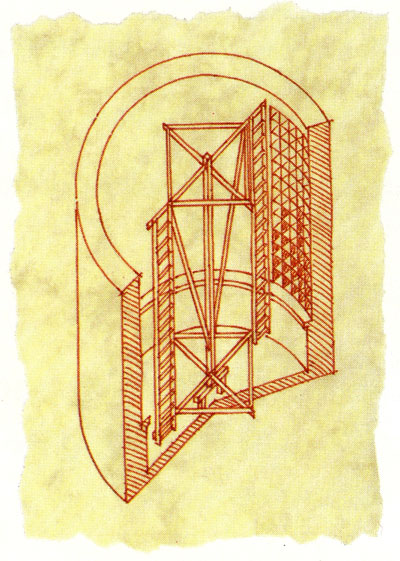 owner's pride in his new status. The 'beehive', common in the Scottish lowlands, has a shallow domed roof, often topped by a cupola where the birds gained access. The 'lectern', which again is distinctively Scottish, is square or double-square with a single pitch roof. There were openings either in the roof or under the eaves. The third and most typical kind, however, was the round or hexagonal tower, found in many parts of the English Midlands and the West Country. The splendid Gothic dovecote in the illustration is at Megginch on Tayside. The weathervane is said to be a model of the vessel aboard which a local man, Captain Drummond, sailed for India in 1783. The birds entered through 'ports' in the blind arched windows. Inside, virtually the whole height of the walls would be lined with nesting boxes, typically about 700 per dovecote. After scrambling through a small entrance hatch, the person collecting the eggs would either lean a ladder against the wall or use the ingenious device in the illustration. Called a potence, it was a revolving ladder attached to a vertically mounted 'axle'.