1855 - The 'Model' Farm
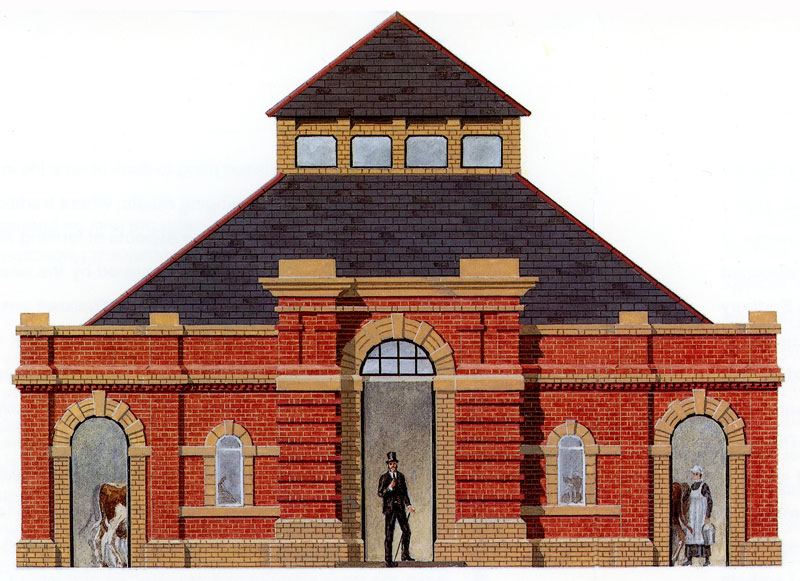
In Victorian times many farms were modernised along scientific/industrial lines - indeed, the Great Exhibition of 1851 had a whole hall devoted to the latest farm machinery. One of the finest model farms was the Royal Dairy Farm at Windsor, designed by J R Turnbull for Prince Albert. It was dominated by the cowhouse, with a double row of stalls for 60 animals. The central door gave access to the main feeding passage; the side doors led to walkways behind each line of stalls. Most farms had grown up piecemeal but here the design and positioning of the building was carefully integrated with its satellite structures. At the far end of the cowhouse was the feed store, while at the side were yards and pens for calving cows. Manure was collected in and distributed from a separate building with easy road access. What would be the advantages of this rationalised layout?
It is tempting to think of rural life in the 19th century as a period of slow, unchanging rituals, where traditional values were vigorously upheld. In fact, many aspects of farming altered almost out of all recognition in this period, triggered by the need to provide the growing urban population with food. Hedgerows were grubbed up to make larger fields for the new machinery to work in; vast tonnages of chemical fertilisers were added to the soil to improve its yield; ambitious drainage schemes were introduced; intensive breeding programmes were begun. British agriculture became the model the rest of the world followed. The deck-clearing that was associated with 'High Farming' involved the wholesale demolition of inconvenient old farm buildings and their replacement by new structures that were designed and sited to make the most efficient use of materials and labour. Most farms had grown up piecemeal over the centuries; now they were to be planned, and made to work according to a system. Acting in consultation with agricultural experts, architects followed logical progressions in determining 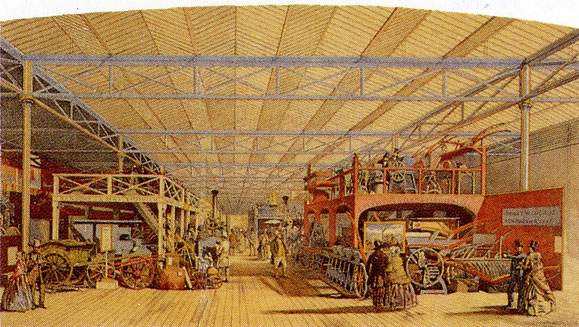 the layout of buildings, with raw materials going in at one end and emerging at the other as finished products. Where beef cattle or pigs were being raised, for instance, corn and fodder crops would be stored in the stackyard where they could be quickly transferred to the adjacent processing house and turned into feed by steam or other mechanical power. This was subsequently passed into the livestock houses where the beasts were fattened for market or the abattoir, though slaughtering might also have been done on the premises. In design and execution, the buildings owed little to traditional farming practice. The roof construction, arched windows and decorative brick courses of the Royal Dairy Farm are more akin to an industrial structure of the Victorian period - a factory, perhaps, or an engineering workshop. Many public buildings, such as swimming baths, have similar features.