1875 - Farmworkers' Cottages
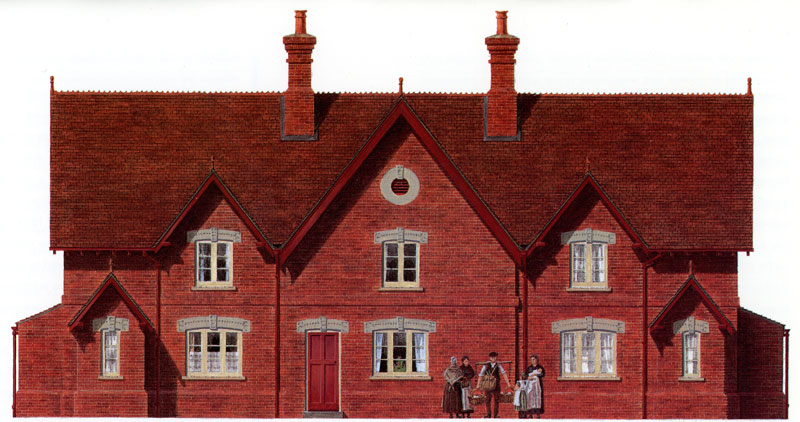
The general policy of farm improvement gradually encompassed the health and well-being of the workforce, who for centuries had been forced to make their homes in whatever crumbling hovels they could find to rent. More enlightened landowners would provide tied cottages with such novel features as wash-houses and proper kitchens, with perhaps a pigsty or vegetable plot 'round the back' to help their employees eke out their meagre wages. On the larger estates - where houses could be grouped together - there were movements towards communal living, with shared bread ovens and allotments, and sometimes a school or meeting hall. This was not pure kindness: in the long term, the welfare of the workers benefited the farmer economically. The purpose-built farm cottages of the Victorian period made astute use of local materials and craft skills in their construction. Most followed an 'Old English' architectural style, with gables and Gothic ornament, elaborate chimneys, small windows (often with mullions and leaded lights) and steeply pitched roofs. How would the farmer gain from having a well-housed workforce?
The conditions in which agricultural labourers lived were, in the 1840s, recognised as a national disgrace. In many cottages, a clergyman thundered, 'human nature is degraded into something below the level of the swine'. Overcrowding, bad sanitation, dirt, disease, malnutrition, immorality, illiteracy and drunkenness - it was a multi-headed hydra, a bitter legacy of neglect in past centuries. The problem was an economic one, irrevocably caught up with the old landlord-tenant-labourer relationship. Few farmworkers could buy their own homes without  exceptional thrift and therefore rented whatever was available. But farm wages were so low that it was almost impossible for owners to derive an economic rent from such properties. Unless they were of an exceptionally philanthropic bent, expenditure on repairs and improvements was correspondingly minimal. Houses fell ever further into disrepair, perpetuating the cycle of misery. Even so, there had always been an acute shortage of low-cost housing in rural areas, the cause of much of the overcrowding. This pressure was to some degree alleviated by the general exodus from the countryside to the towns that followed in the wake of the Industrial Revolution. The irony of devoting considerable effort to the conditions under which livestock was accommodated, while at the same time virtually ignoring the squalor in which many thousands of agricultural workers and their families were forced to live, was not lost on more enlightened thinkers of the day. If people were well housed, they argued, they would form a more contented and settled labour force, ready to do their masters' bidding, less inclined to drift away in search of better conditions elsewhere - or to seek escape in the alehouse. The economic benefits were widely advertised and, with this assurance, many landowners began to provide higher standards of housing, such as this group of farm cottages on an estate in Dorset which are lived in to this day.